
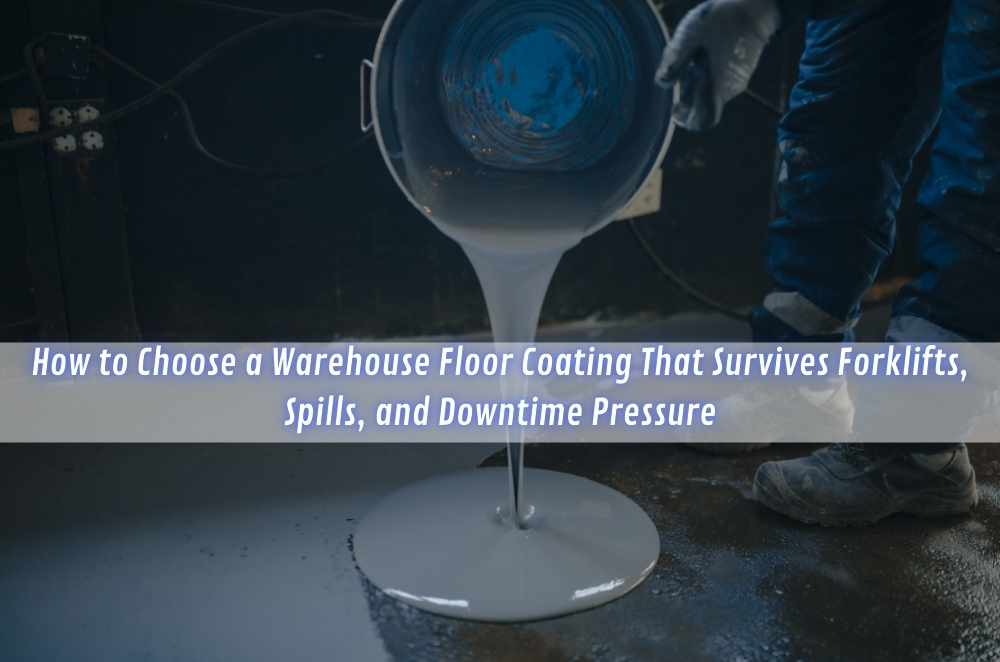
Walk through any busy warehouse, workshop, commercial kitchen, or well-used garage and you’ll see the same reality: floors aren’t passive surfaces. They take impacts, abrasion, chemical drips, hot tyres, dragged pallets, regular wash-downs, and the occasional “we’ll clean it later” spill. Heavy duty epoxy floor systems exist for exactly this kind of environment—where the right coating can make day-to-day cleaning easier, reduce dusting, and help a concrete slab cope with hard use.
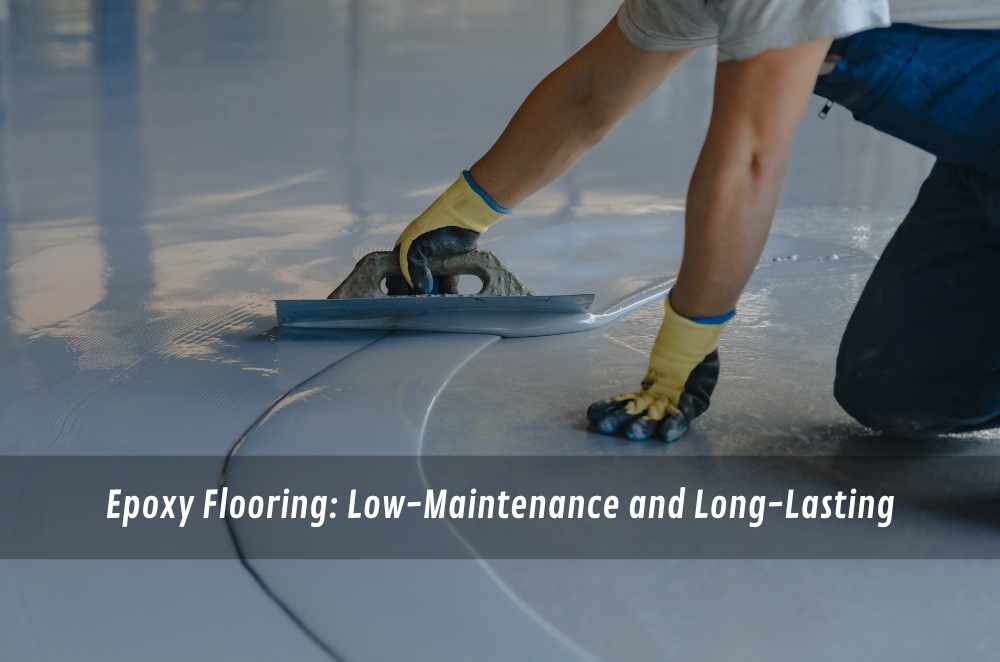
But “heavy duty” isn’t a single product you buy off a shelf. It’s a system: surface preparation, primer, build coat, optional broadcast (like flake or quartz), a topcoat chosen for wear and chemical exposure, plus details like cove joints, drainage falls, and line marking where needed. Get the system design right and you can achieve a hard-wearing, seamless surface that’s easier to clean and can resist common workshop and industrial contaminants. Get it wrong and you can end up with peeling, bubbles, slippery patches, or premature wear—often because of what happened (or didn’t happen) before the first coat went down.
What makes a floor system “heavy duty”
A heavy-duty epoxy system is usually defined by how it performs under load, not by how shiny it looks on day one. In practical terms, you’re looking at a coating build and chemistry that can handle:
Abrasion and impact from traffic (people, trolleys, pallet jacks, forklifts)
Chemical exposure (cleaning agents, oils and grease, and other site-specific contaminants)
Frequent cleaning—including detergents and wash-down routines
Moisture management (both rising moisture from slabs and wet-use environments)
“Heavy duty” can also mean the system includes additional layers or aggregates to increase thickness, traction, and wear life—especially in commercial and industrial settings where the floor is expected to perform for years rather than months.
The core decision: epoxy chemistry vs the environment
Epoxy is the headline name, but many real-world “heavy-duty” packages also blend or pair epoxy with other resin technologies—each with pros and cons depending on the space.
Epoxy
Epoxy is widely used for its hardness, adhesion (when the slab is prepared properly), and the seamless, cleanable surface it can create. It’s common in workshops, warehouses, garages, and many commercial interiors because it can be designed to be durable and low maintenance.
Polyurethane and polyaspartic (often used as topcoats or alternative systems)
Some installers also provide polyurethane and polyaspartic resilient flooring systems alongside epoxy. These are often selected when a site needs different wear characteristics, UV stability, or specific cure profiles. The right choice depends on where the floor sits (indoors/outdoors), how quickly it needs to return to service, and what it’s exposed to day-to-day.
The point isn’t that one chemistry is “best” universally—it’s that “heavy duty” is achieved by matching the system to the environment.
Surface preparation: where heavy-duty floors are won or lost
If you only remember one thing: most coating failures trace back to preparation.
Concrete might look solid, but it can be contaminated (oil, curing compounds), too smooth (poor mechanical key), moisture-affected, or cracked. Proper prep typically involves mechanical grinding (often dust-controlled), repairs to cracks and joints, and a clear plan for edges, corners, and transitions. Some installers emphasise dust-free surface preparation equipment as part of achieving a quality result.
In Sydney, older slabs and mixed-use spaces (think: a former storage area turned workshop) often come with unknown history—patches, sealers, or moisture behaviour that only becomes visible when prep begins. That’s why a site assessment matters: it informs whether you need extra moisture mitigation, heavier repairs, or a different system build.
A simple prep “red flag” checklist
The floor is being coated over visible contaminants or shiny sealed concrete
Cracks are being “painted over” rather than repaired appropriately
Edges, steps, and door thresholds are being ignored (common peel points)
There’s no plan for drainage falls or wet-use detailing where water is routine
Where heavy-duty epoxy systems make sense
Heavy-duty epoxy systems tend to be most valuable where cleaning, durability, and surface consistency affect operations.
Warehouses and workshops
A seamless, easy-to-clean surface can reduce dusting and make routine maintenance more predictable, particularly where oils, detergents, and traffic are part of daily life. In workshops, resistance to drips and grime matters as much as the finish.
Commercial environments
Large commercial floors often prioritise cleanability, durability, and chemical resistance, particularly where cleaning agents are frequently used.
Garages (home and trade)
Garage epoxy is often chosen for a hard-wearing surface that’s easier to clean and more resistant to staining and wear than bare concrete—especially where heavy equipment, tools, or vehicles are involved.
Food handling and wet-use areas
These spaces tend to be less forgiving: hygiene routines, slip concerns, and frequent wash-downs mean system selection, texture, and detailing (like coving) should be handled carefully.
Texture, slip risk, and real-world safety
One of the easiest mistakes is treating “smooth” as the default. A glossy, smooth finish can look great—until water, oils, or cleaning foam appear. Heavy-duty systems often include texture options (broadcast aggregates, orange peel, satin topcoats) to balance cleanability with traction.
There’s a practical trade-off:
More texture can increase grip but may hold dirt if cleaning is infrequent
Less texture is easier to mop but can be riskier when wet
The best approach is to decide based on how the space is actually used—then choose a finish that supports those routines (including the cleaning chemicals used on site).
Designing for durability: thickness, layers, and detailing
“Heavy duty” frequently comes down to build and details:
Primers and moisture management to support adhesion
Higher build coats for wear resistance
Broadcast systems (flake/quartz) where texture and durability are needed
Topcoats chosen for chemical exposure and wear patterns
Detail work at drains, edges, and transitions
For commercial epoxy flooring, some providers describe heavy duty coatings as resistant to chemicals, cleaning detergents, oils and fats, dirt and water—useful language, but only meaningful if the system build is matched to your site and installed correctly.
What to ask a flooring contractor before you commit
Even if you’re not a coatings expert, you can ask questions that reveal whether someone is designing a system—or simply selling a generic package.
Questions that usually lead to better outcomes
What preparation method will you use, and why is it suited to this slab?
How will you handle cracks, joints, and any moisture risk?
What system build are you proposing (layers/topcoat), and what’s it designed to resist in this space?
What finish/texture do you recommend for slip risk and cleaning routines?
How should the floor be maintained, and which cleaners should be avoided?
If you’re comparing options locally, it can help to review a provider’s breakdown of commercial and industrial resilient flooring systems and where each is used—especially if they also work across epoxy, polyurethane, and polyaspartic systems, which broadens the design choices. One example is this overview of resilient epoxy flooring systems in Sydney.
Maintenance: the part that protects your investment
A heavy-duty epoxy floor isn’t maintenance-free—it’s maintenance-simplified. Most sites do best with:
Regular dust control (dry mop/scrub) to reduce abrasion
Prompt spill clean-up (especially oils and aggressive chemicals)
Periodic deeper cleaning with appropriate detergents
Avoiding harsh tools that can scratch or gouge the surface
Over time, some floors may benefit from a refresh coat depending on traffic and use. Planning for that possibility is part of thinking “system” rather than “paint.”
The bottom line
Heavy-duty epoxy floor systems are less about chasing an “industrial look” and more about engineering a surface that performs under your specific conditions. The right system starts with slab assessment and preparation, then matches resin type, thickness, texture, and detailing to how the space is used—day after day.
Done well, it can be one of the most practical upgrades you make to a working environment: easier cleaning, better wear resistance, and a floor that looks consistent because it’s built to handle real life.
Key Takeaways
“Heavy duty” is a system (prep + layers + topcoat + details), not a single product.
Surface preparation is the most common make-or-break factor for long-term performance.
Chemical and cleaning-agent resistance depends on choosing the right build for the site.
Texture and finish should be selected based on wet risk and cleaning routines, not aesthetics alone.
Asking the right questions up front is often the simplest way to avoid premature coating failures.




Write a comment ...